Garage Door Spring Repair vs. Replacement: What Louisiana Homeowners Need to Know
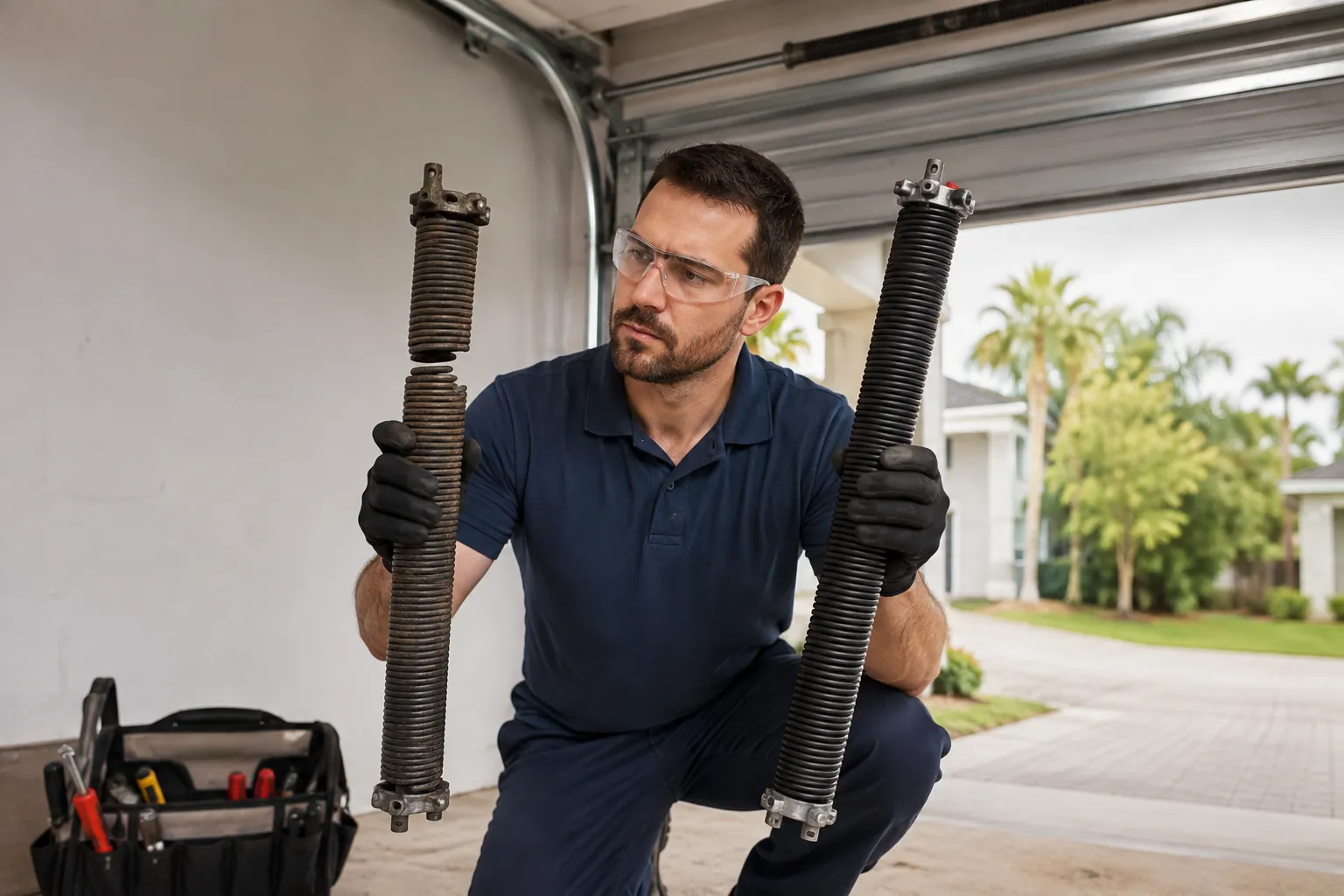
When a garage door spring starts acting up, most homeowners immediately ask the same question: is this something that can be repaired, or do I need a full replacement? The terminology gets used loosely across the industry, and that ambiguity can make it harder to know what to expect from a service call. This guide explains what "garage door spring repair" actually means in practice, when replacement becomes necessary, and how Covington, LA and Northshore homeowners can make an informed decision with the help of a professional garage door spring replacement technician.
What Does a Garage Door Spring Do?
A garage door spring counterbalances the weight of the door — often 300 to 400 pounds — so it can be lifted with minimal effort by the opener or by hand. Torsion springs mount on a shaft above the door and twist to store energy; extension springs stretch along the tracks on either side of the door. Both do the same basic job, but they wear, fail, and get serviced differently, which matters when you're deciding between repair and replacement.
Torsion Springs vs. Extension Springs
Torsion springs are more common on newer doors and generally offer smoother, more controlled movement, while extension springs are more typical on older installations. The distinction matters for this decision because torsion and extension systems require different tools, techniques, and safety precautions to service — which is part of why "repair" so often means something different than homeowners expect.
What Does "Garage Door Spring Repair" Actually Mean?
In everyday use, "garage door spring repair" usually refers to the full service visit rather than literally repairing the spring itself — diagnosing the problem, removing a failed or failing spring, and installing a correctly sized replacement. Occasionally, a spring hasn't broken outright but has come loose from its mounting or needs re-tensioning; in those specific cases, a technician may be able to adjust or reseat it without full replacement. But once a spring has actually snapped or lost its coil tension, "repair" and "replace" become the same job — which is why the wording on a quote can be confusing when two companies describe the identical service differently.
Can a Broken Garage Door Spring Be Repaired?
In almost all cases, no — a broken garage door spring needs replacement, not repair. Once a torsion or extension spring snaps or loses tension, the metal can't be safely re-wound, welded, or patched back to its original strength. What a technician can do is inspect the spring, confirm it's beyond repair, and replace it with a correctly sized unit matched to your door's weight and track setup. This distinction surprises a lot of homeowners who assume "repair" means a quicker, cheaper fix than "replacement" — for a genuinely broken spring, there isn't a lesser option available. If you're not sure whether your spring is broken in the first place, our companion article on recognizing the signs of a broken garage door spring covers the warning signs in detail.
Signs Your Spring Needs Attention
Some signs point to gradual wear rather than sudden failure, and catching them early can turn a spring issue into a planned repair visit instead of an emergency call: a door that feels slightly heavier than it used to, visible rust or gaps forming in the coil, a door that closes faster than it used to, or an opener that seems to strain more than before. A loud bang, a door that won't lift at all, or a visibly separated coil are signs of an already-broken spring rather than early wear — at that point, replacement is the only safe path forward.
Should You Replace One Spring or Both?
This depends on the springs' age and condition rather than a blanket rule. If both springs were installed at the same time and one has failed from normal wear, the other has likely absorbed a similar number of cycles and may be close behind — replacing both during the same visit can prevent a second failure and a second service call soon after. That said, if one spring was replaced more recently than the other, it may still have plenty of life left. A technician can inspect both springs' condition and give you a straight recommendation rather than defaulting one way or the other. Since the technician is already on-site with the door open for spring access, handling a second spring that's clearly near the end of its life in the same visit is usually more convenient than a separate call later.
How Long Do Garage Door Springs Last?
Most garage door springs are rated for roughly 10,000 to 20,000 open-close cycles, which works out to about 7 to 14 years under average household use. Frequency of use is the biggest factor — a door opened multiple times a day accumulates cycles faster than one used once or twice — followed by maintenance, spring type, and environmental conditions. A household that treats the garage as a main entry point will typically see springs wear out sooner than one that uses it occasionally, simply due to the higher cycle count.
What Affects Spring Lifespan in Louisiana?
Covington and the Northshore's humidity and coastal air accelerate corrosion on unprotected spring coils, which can shorten a spring's effective lifespan compared to drier climates, even if it hasn't reached its full cycle count. Skipping routine garage door maintenance — lubrication and periodic checks — lets that early corrosion and wear go unnoticed until the spring fails outright rather than showing gradual warning signs.
Is Garage Door Spring Replacement Dangerous to Do Yourself?
Yes. Garage door springs are under hundreds of pounds of stored tension, and improper handling during removal or installation can cause severe injury or death. Winding, unwinding, or replacing a torsion or extension spring requires specialized tools and training, which is why this should always be handled by a trained technician rather than attempted as a home project.
Why a Professional Spring Inspection Matters
A garage door safety inspection can catch spring wear before it becomes a sudden failure — checking coil condition, tension, and mounting hardware alongside the rest of the door's components. Since the difference between a wear-related adjustment and a full replacement often isn't obvious to a homeowner, an inspection is the most reliable way to know which category your spring falls into before it fails at an inconvenient moment.
What to Expect During a Spring Service Visit
A typical visit starts with a technician inspecting both springs and related hardware, since a spring rarely fails in isolation from the rest of the system. From there, they'll explain whether your springs need full replacement or whether a wear-related adjustment is appropriate — and confirm the correct spring size and type for your door before any work begins.
Garage Door Spring Repair & Replacement in Covington, LA
Certified Garage Door provides same-day and next-day garage door spring replacement and diagnostic service for homeowners throughout Covington. Our technicians are trained on major brands including LiftMaster, Clopay, and Amarr, and can tell you during the visit whether your situation calls for a straightforward adjustment or a full spring replacement. Learn more on our Covington garage door services page, or read about our team on our About Us page.
Serving the Northshore
Beyond Covington, Certified Garage Door provides the same spring repair and replacement service throughout the Northshore, including Mandeville, Madisonville, Hammond, Ponchatoula, and Slidell. Wherever you're located in St. Tammany Parish, our technicians bring the same diagnostic approach to every visit.
Is Spring Repair or Replacement Better?
Neither is inherently "better" — it depends on your spring's actual condition, which is why professional assessment matters more than guessing. A spring that's still intact but showing early wear may only need adjustment or a maintenance visit; a spring that's already broken needs replacement, full stop. The safest and most cost-effective path is always the same: have a technician look at it before deciding, rather than assuming either outcome in advance.
Frequently Asked Questions
Is it dangerous to replace a garage door spring myself?
Yes. Garage door springs hold hundreds of pounds of tension, and improper handling can cause severe injury. This should always be left to a trained technician.
A broken or worn garage door spring isn't something to guess about — the safest way to know whether you need a quick adjustment or a full replacement is a professional look. Certified Garage Door has helped Covington and Northshore homeowners make that call for years, and our customer reviews reflect that experience.
Can a broken garage door spring be repaired?
Almost never in the traditional sense — once a spring snaps or loses coil tension, it needs full replacement rather than repair.
Should I repair or replace my garage door spring?
If the spring is already broken, replacement is necessary. If it's showing early wear but is intact, a technician may be able to adjust or service it instead.
When does a garage door spring need replacement?
When it has snapped, visibly separated, lost tension, or reached the end of its rated cycle life — typically 10,000 to 20,000 cycles, or about 7 to 14 years of average use.
How do I know my garage door spring is failing?
Watch for a door that feels heavier than usual, closes faster than normal, visible rust or gaps in the coil, or an opener that strains more than it used to.
How do I know if my torsion spring is broken?
A loud bang, a door that won't lift despite the opener running, or a visible gap in the coil above the door are the clearest signs of a broken torsion spring.
Should I replace both garage door springs?
Often yes, if both are the same age, since the second is usually close behind the one that failed — but a technician should confirm this for your specific springs.
How long do garage door springs last?
Most are rated for roughly 10,000 to 20,000 cycles, or about 7 to 14 years under average household use, though climate and usage affect that timeline.
Why do garage door springs break?
Normal wear after thousands of cycles is the most common cause, often accelerated by corrosion, humidity, or lack of maintenance.
Can I use my garage door with a broken spring?
No. Operating a door with a broken spring is unsafe, since the door's weight is no longer supported and it can drop unexpectedly.
Who provides garage door spring replacement in Covington, LA?
Certified Garage Door provides same-day and next-day garage door spring repair and replacement throughout Covington and the Northshore.
Not Sure If You Need Repair or Replacement? Let's Find Out.
Whether your garage door spring is showing early wear or has already failed, Certified Garage Door can assess it and recommend the right fix — no guessing required. Request your free estimate today or call (985) 234-9130 to schedule a technician in Covington or anywhere across the Northshore.
Schedule Your Local Garage Door Service Today!