Broken Garage Door Spring? Signs, Causes & When to Call for Repair in Covington, LA
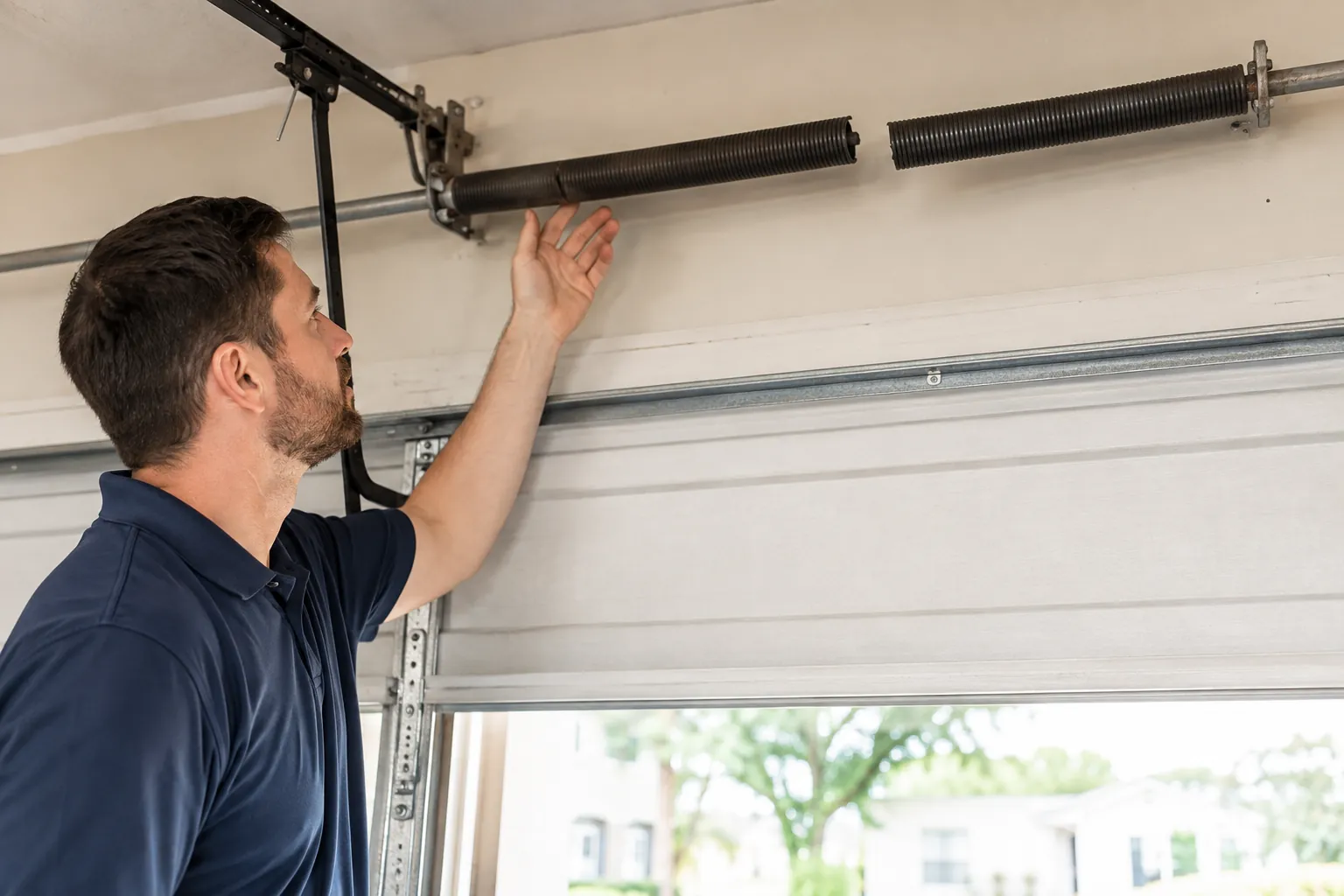
If your garage door suddenly feels impossible to lift, won't budge when the opener runs, or you just heard a loud bang from the garage, a broken spring is almost always the reason. Garage door springs do the heavy lifting — literally — and when one fails, the door becomes unsafe to operate until a qualified technician repairs it. Below, we break down exactly what a spring does, the signs that yours has failed, why springs break in the first place, and when it's time to call a professional for garage door spring replacement in Covington, LA and across the Northshore.
What Does a Garage Door Spring Do?
A garage door spring counterbalances the weight of the door — which can run 300 to 400 pounds — so the opener, or you manually, can lift it with minimal effort. Torsion springs sit above the door and twist to store energy, while extension springs run along the horizontal tracks and stretch to do the same job. When a spring is intact, lifting or lowering the door feels smooth and controlled. When it fails, that counterbalance disappears, and the door's full weight is suddenly unsupported.
What Are the Signs of a Broken Garage Door Spring?
The clearest sign is a loud bang from the garage, often mistaken for something falling or a car backfiring — it's usually the spring snapping under tension. Beyond that, watch for:
- The opener runs, but the door doesn't lift (or only rises a few inches)
- The door feels unusually heavy when you try to lift it manually
- The door moves crooked or uneven, dropping more on one side
- A visible gap or separation in the spring coil above the door
- The door drops quickly or slams shut instead of closing smoothly
- The opener strains audibly or reverses mid-cycle, as if fighting the door's weight
If you notice any of these, stop using the door and avoid running the garage door opener until it's inspected — forcing a door with a failed spring puts extra strain on the opener motor and track hardware, and can turn one repair into two.
Why Do Garage Door Springs Break?
Most spring failures come down to normal wear: every spring is rated for a set number of open-close cycles — roughly 10,000 to 20,000, or about 7 to 14 years under average daily use — and eventually the metal simply fatigues. Corrosion speeds that timeline up considerably, and Louisiana's humidity and coastal air make rust and metal fatigue a bigger factor here than in drier climates. A spring that's the wrong size or tension for the door's weight will also wear out faster, and skipping garage door maintenance — lubrication and periodic checks — lets small wear go unnoticed until the spring gives out completely.
Torsion Springs vs. Extension Springs
What's the difference between torsion and extension springs? Torsion springs mount horizontally on a shaft above the closed door and twist to store lifting force; most newer doors use this style for smoother, more controlled movement. Extension springs stretch and contract along the tracks on either side of the door and are more common on older installations. Both fail the same way — through cycle fatigue, corrosion, or sudden stress — but require different tools and techniques to service safely, which is why spring work should always go to a trained technician.
Can You Open a Garage Door With a Broken Spring?
No. A garage door with a broken spring should not be opened or operated, manually or with the opener. Without the spring's counterbalance, the door's full weight is unsupported, and it can fall rapidly and without warning. If your spring has failed, leave the door closed or in its current position, keep the area clear, and contact a professional for garage door repair before attempting to use it again.
Is a Broken Garage Door Spring Dangerous?
Yes. A garage door spring stores hundreds of pounds of tension, and when it breaks, that stored energy has nowhere controlled to go — the door can drop suddenly, and a snapped spring can whip with enough force to cause serious injury. Stop using the door and keep people and pets clear of it until a technician arrives.
Is It Safe to Repair a Garage Door Spring Yourself?
No. Garage door springs are under hundreds of pounds of stored tension, and improper handling can cause severe injury or death. This isn't a typical homeowner repair. Winding, unwinding, or removing a torsion or extension spring requires specialized tools and training; even experienced DIYers can be seriously hurt by a spring releasing unexpectedly. This is one job best left to Certified Garage Door's trained technicians.
Does a Broken Spring Need Repair or Replacement?
In almost all cases, a broken spring needs full replacement rather than a repair — once a spring snaps or loses tension, it can't be safely re-wound or patched. What's sometimes described as "spring repair" typically refers to the full service visit: diagnosing the failure, removing the broken spring, and installing a properly sized replacement matched to your door's weight and track configuration.
Should Both Garage Door Springs Be Replaced?
It depends on the springs' age and condition. If both springs were installed at the same time and one has failed from normal wear, the other is likely close behind, and replacing both during the same visit can prevent a second breakdown — and service call — soon after. That said, it's not an automatic rule for every situation: a spring that was replaced more recently than its counterpart, or one that's seen noticeably less use, may still have plenty of life left. A technician can inspect both springs and give you a straight answer on whether one or two need replacing, rather than defaulting to a blanket recommendation either way.
How Long Do Garage Door Springs Last?
Most garage door springs are rated for roughly 10,000 to 20,000 open-close cycles, which works out to about 7 to 14 years for an average household. Actual lifespan depends heavily on how often the door is used, how well it's maintained, and local climate conditions. A garage door safety inspection can estimate roughly where your springs stand in that cycle and flag wear before it becomes a sudden failure.
How Can Louisiana Weather Affect Garage Door Components?
Covington and the Northshore's humidity and salt-tinged coastal air accelerate corrosion on unprotected metal spring coils, which can shorten spring life compared to drier regions. Heat and moisture swings also affect other components — openers, tracks, and rollers — which is part of why routine maintenance and inspection matter more here than in milder climates.
Garage Door Spring Repair in Covington, LA
Certified Garage Door is based in Covington and provides same-day and next-day garage door spring replacement for homeowners throughout the area. Our certified technicians are trained on all major brands, including LiftMaster, Clopay, and Amarr, and most spring replacements are completed in one to two hours. See our Covington garage door services page for more on how we serve local homeowners.
Garage Door Spring Service Across the Northshore
Beyond Covington, Certified Garage Door provides the same spring repair and replacement service throughout the Northshore, including Mandeville, Madisonville, Hammond, Ponchatoula, and Slidell. Wherever you're located in St. Tammany Parish, our technicians bring the same diagnostic approach and properly sized replacement springs to get your door working safely again.
When Should You Call a Garage Door Professional?
Call a professional as soon as you notice a loud bang, a door that won't lift, or a visibly separated spring — waiting only increases strain on the opener and track hardware and raises the risk of an unexpected door drop. A quick garage door repair call at the first sign of trouble is almost always simpler and safer than dealing with a fully jammed or fallen door later. If you're unsure whether what you're seeing is spring-related, our technicians can diagnose it during a same-day visit.
A broken spring is inconvenient, but it's also a genuine safety issue — not a project to troubleshoot alone. Certified Garage Door has helped Covington and Northshore homeowners get back to safe, reliable garage door operation for years, and our customer reviews reflect that same commitment on every call.
Frequently Asked Questions
Q: Can I open my garage door with a broken spring?
A: No — operating the door without the spring's counterbalance means it can fall rapidly and without warning. Leave it closed and call a technician.
Q: How long do garage door springs typically last?
A: Most springs are rated for about 10,000 to 20,000 cycles, or roughly 7 to 14 years of average household use, though Louisiana's humidity can shorten that timeline.
Q: Does Certified Garage Door serve my area on the Northshore?
A: Yes — Certified Garage Door provides garage door spring repair and replacement in Covington, Mandeville, Madisonville, Hammond, Ponchatoula, and Slidell.
Q: How do I know if my garage door spring is broken?
A: Listen for a loud bang, and check whether the door feels unusually heavy, opens only partway, or moves unevenly. A visible gap in the spring coil above the door is also a clear sign.
Q: Why won't my garage door open?
A: A broken spring is one of the most common reasons a garage door won't lift, even when the opener motor runs normally — without the spring's counterbalance, the opener alone often can't raise the door's full weight.
Q: What happens when a garage door spring breaks?
A: The door loses its counterbalance support, becomes extremely heavy, and can drop suddenly if operated. You'll typically hear a loud bang at the moment it snaps.
Q: Is a broken garage door spring dangerous?
A: Yes. Springs are under significant tension, and a broken or failing spring can cause the door to drop unexpectedly, creating a serious injury risk to anyone nearby.
Q: Why did my garage door spring snap?
A: Most springs fail from normal wear after thousands of open-close cycles, often accelerated by corrosion, humidity, or lack of regular maintenance.
Q: Can a garage door spring be repaired, or does it need replacement?
A: Once a spring breaks or loses tension, it needs full replacement rather than repair — a snapped spring can't be safely re-wound or patched.
Q: Should both garage door springs be replaced at the same time?
A: Often yes, if both springs are the same age, since the second is usually close to failing too. A technician can confirm this based on the condition of both springs.
Q: Can I replace a garage door spring myself?
A: No. Garage door springs are under hundreds of pounds of tension, and improper handling can cause severe injury. This should always be handled by a trained technician.
Q: Who repairs broken garage door springs near me in Covington, LA?
A: Certified Garage Door provides same-day and next-day garage door spring repair and replacement throughout Covington and the Northshore.
Q: Who repairs garage door springs in Mandeville, LA?
A: Certified Garage Door services Mandeville along with Covington, Madisonville, Hammond, Ponchatoula, and Slidell for spring repair and replacement.
Q: How quickly should a broken spring be repaired?
A: As soon as possible. A door with a broken spring shouldn't be used at all, so scheduling same-day or next-day service helps avoid extended inconvenience and further strain on the opener.
Request Your Free Estimate
Hearing a loud bang or noticing your garage door won't budge? Don't risk operating a door with a broken spring. Certified Garage Door provides same-day and next-day garage door spring repair and replacement throughout Covington and the greater Northshore. Request your free estimate today or call (985) 234-9130 to schedule a technician.
Schedule Your Local Garage Door Service Today!