Garage Door Sensor Repair: Troubleshooting & Fixing Safety Eye Issues in 2026
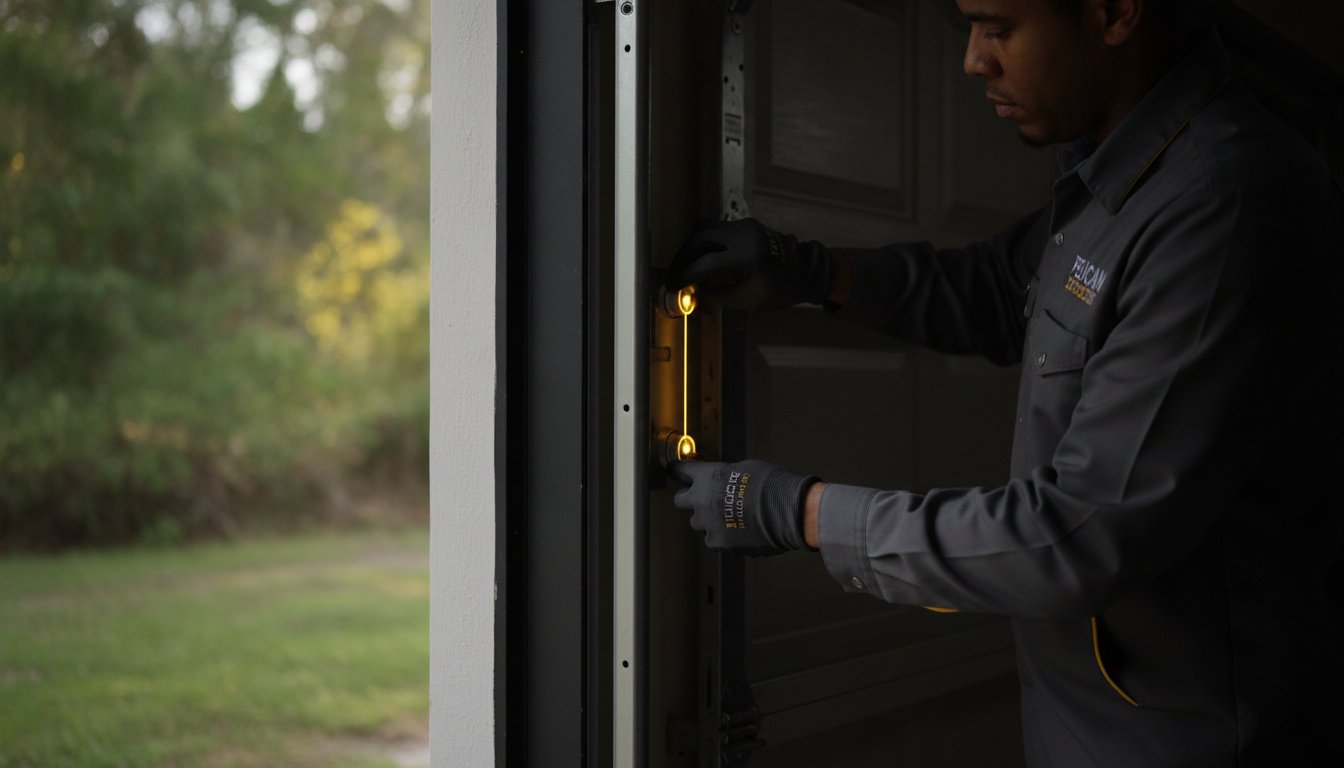
Did you know that misaligned sensors account for 60% of all garage door sensor service calls? If your door keeps reversing for no reason, you're likely searching for a garage door sensor repair solution that doesn't involve holding down the wall button every time you leave the house. It's frustrating to deal with a door that refuses to close, especially when you're worried about the safety of your pets, children, or your vehicle.
You deserve a garage door that works reliably without the constant guesswork. This guide will show you how to identify, troubleshoot, and fix common safety eye issues to restore your home's convenience. We'll walk through practical DIY steps, explain what those blinking light codes actually mean, and help you decide if it's a simple alignment task or time to call in a professional technician.
Since federal law has mandated these sensors for decades, keeping them functional isn't just about convenience; it's about maintaining a critical safety standard for your family. By the end of this article, you'll have the knowledge to get your garage door back on track quickly and safely.
Key Takeaways
- Decode your sensor's light signals to pinpoint whether the issue is a simple obstruction or a signal failure between the sending and receiving units.
- Learn the specific steps for cleaning and realigning your safety eyes to avoid the daily inconvenience of holding down the wall button.
- Identify when a garage door sensor repair requires professional diagnostic tools to fix complex wiring or logic board communication errors.
- Discover why relying on manual overrides can compromise your home's safety and how to restore the automatic reversal features mandated by federal standards.
- Understand why local experts in Covington and the Northshore prioritize a full safety inspection as part of every sensor service call.
Table of Contents
- Understanding Garage Door Sensors and Why They Fail
- Decoding Sensor Light Signals: What the Blinking Means
- Troubleshooting vs. Professional Repair: When to Call an Expert
- Step-by-Step Guide to Realigning and Cleaning Sensors
- Professional Sensor Repair in Covington and the Northshore
Understanding Garage Door Sensors and Why They Fail
Garage door sensors, technically known as photo-eye sensors, are the silent guardians of your driveway. Since January 1, 1993, federal law has required every residential opener to include a secondary entrapment protection system. This mandate, known as the UL 325 safety standard, ensures your heavy garage door doesn't become a safety hazard. These sensors work in pairs: one unit sends an invisible infrared beam to a receiving unit on the opposite side of the track. If that beam is interrupted while the door is closing, the photo-electric sensors send an immediate signal to the opener's logic board to reverse the motor.
When this system fails, the symptoms are usually unmistakable. You might see your door start to close and then suddenly reverse for no apparent reason. Often, you'll notice one of the small LED lights on the sensor housing blinking rapidly instead of glowing steady. While it's tempting to think you need an immediate garage door sensor repair professional, the issue could range from a simple cardboard box in the way to a complex technical malfunction in the wiring or logic board communication.
The Role of Safety Sensors in Home Security
The primary job of these sensors is to prevent property damage and, more importantly, physical injury. With more than 20,000 garage door-related injuries treated in emergency rooms each year, these safety eyes are your first line of defense. They protect children and pets who might dart under a closing door. Modern openers are built with a "fail-safe" design. If the sensor circuit is broken or the units lose power, the door simply won't close using the remote or keypad, forcing you to address the safety gap immediately.
Environmental Factors Impacting Louisiana Garage Doors
Living on the Northshore presents unique challenges for mechanical components. In cities like Covington and Mandeville, high humidity levels can lead to rapid corrosion of the delicate wire terminals. Moisture often seeps into the sensor housing, causing the internal components to short out over time. This makes regular maintenance essential for coastal and high-humidity climates.
Local wildlife also plays a role. Spiders frequently build webs across the tracks, and a single thick cobweb can catch enough dust to block the infrared beam. Additionally, western-facing garages in Louisiana often struggle with sunlight interference. During certain times of the day, the intense afternoon sun can "blind" the receiving sensor, tricking the system into thinking there's an obstruction. If you find your door only malfunctions during sunset, you likely need a specific garage door sensor repair adjustment to shield the lenses from glare or realign the housing to compensate for the light angle.
Decoding Sensor Light Signals: What the Blinking Means
Checking the status lights on your safety eyes is the fastest way to diagnose a problem. These small LEDs provide a roadmap for your garage door sensor repair by signaling exactly where the communication break is happening. Most modern systems follow the "Green vs. Amber" rule. The amber or orange light identifies the sending sensor, which projects the beam. The green light sits on the receiving sensor. If the amber light is solid but the green light is blinking or dark, the receiver isn't catching the signal. A flickering light usually indicates a loose wire connection.
Your wall console also acts as a diagnostic tool. Some advanced consoles will display specific error codes or blink in patterns to tell you if the sensors are the culprit. These signals are more than just a convenience; they ensure your system adheres to mandatory federal safety standards designed to prevent entrapment. If the door reverses and the main overhead light flashes ten times, the system is explicitly telling you that the safety sensors are either blocked or misaligned.
Brand-Specific Light Patterns (LiftMaster, Genie, Chamberlain)
Different manufacturers use unique "languages" to communicate health. LiftMaster and Chamberlain models are famous for the ten-flash warning from the main opener bulb. On the sensors themselves, a glowing green light means they're "seeing" each other perfectly. Genie systems often use a combination of red and green flickering patterns. A solid red light on a Genie sensor usually means it's powered but not aligned, while a blinking red light indicates an obstruction. Understanding these nuances helps you skip the guesswork and move straight to the fix.
The Difference Between Misalignment and Power Loss
If you see no lights at all on either sensor, you aren't dealing with an alignment issue; you're dealing with a power failure. Start by checking the opener's power source and the small "bell wires" running from the motor head to the sensors. These wires are thin and easily snagged by garden tools or bikes. If one sensor is lit but the other is completely dark, the dark unit likely has a severed wire or a dead internal circuit.
Sometimes, the sensors are perfectly fine, but the opener's logic board fails to process the signal. This is a more complex garage door sensor repair that involves testing the voltage at the motor terminals. If you've checked the wires and cleaned the lenses but the lights remain off, a professional garage door safety inspection can determine if the issue lies in the motherboard. Identifying the difference between a simple "blind" sensor and a dead circuit saves you from wasting time on adjustments that won't solve the underlying electrical problem.
Troubleshooting vs. Professional Repair: When to Call an Expert
Before you schedule a professional garage door sensor repair, start with a simple visual inspection. Most issues stem from a stray garden rake, a child's toy, or a buildup of dust on the lenses. Use a soft cloth to wipe the sensors and ensure they are mounted according to The Six-Inch Rule. This industry standard dictates that sensors should be no higher than six inches above the floor to properly detect obstructions like small pets or children. If the sensors are clean and clear but the lights still blink, you likely have a technical failure rather than a simple blockage.
Many homeowners rely on a "sensor override" by holding down the wall button until the door closes. While this works in a pinch, it's an extremely dangerous long-term habit. This bypasses the automatic reversal system, creating a significant safety risk and potential liability. If the sensors aren't working, the door won't stop for a car or a person, which can lead to expensive property damage or serious injury. If your system requires this override every time, it's a clear sign that you need a permanent fix rather than a temporary workaround.
Physical damage is another point where DIY efforts usually end. Sensors are delicate electronic components. If a lens is cracked or the housing has taken on water from a heavy Louisiana rainstorm, cleaning won't help. Moisture inside the casing often leads to irreversible corrosion. In these cases, a full replacement of the sensor pair is the only reliable way to restore your home's safety and convenience.
The Dangers of DIY Wiring Repairs
Attempting to repair complex wiring without the right tools can lead to bigger headaches. Professional technicians use volt-meters to test for consistent power delivery, whereas a DIY "twist and tape" method often results in intermittent failures or short circuits. Incorrectly handling these low-voltage wires can accidentally fry the opener's logic board. Replacing a motherboard is significantly more expensive than a standard garage door sensor repair, so it's best to leave the electrical diagnostics to those with the proper equipment and training.
Value of a Professional Safety Inspection
When you call for expert help, a technician doesn't just look at the blinking lights. Every service call should include a comprehensive Garage Door Safety Inspection. Sometimes, what looks like a sensor failure is actually a symptom of a shifting track or a door that's fallen out of balance. Professionals check the entire system to ensure your door operates smoothly, giving you peace of mind that the underlying cause is resolved, not just the symptom.
Step-by-Step Guide to Realigning and Cleaning Sensors
Most garage door sensor repair tasks don't require a full replacement. If you have confirmed that your sensors have power but are simply "blind," you can likely restore functionality with a few household tools. Grab a soft microfiber cloth, a screwdriver, and a long piece of string or a level. Precision is the goal here. Even a slight tilt can cause the infrared beam to miss the receiving lens, triggering the door to reverse and leave your home vulnerable.
Step 1: Clearing and Cleaning the Pathway
In the Northshore area, the "cobweb factor" is a frequent culprit. Spiders love the cool, dark corners of garage door tracks, and their webs easily trap dust and debris that block the sensor's signal. Start by clearing away any trash cans, garden tools, or boxes that might be nudging the brackets. Use your soft cloth and a small amount of water or a mild, non-abrasive soap to wipe the lenses. Avoid harsh chemical cleaners or paper towels, as these can scratch the delicate plastic lenses and permanently diffuse the infrared beam, making a professional garage door sensor repair unavoidable.
While you're down there, inspect the tracks for any physical bends. Louisiana's high humidity can sometimes cause metal brackets to rust or warp over time. If a bracket is loose or bent, the sensor will never stay aligned, no matter how many times you adjust it. Tighten any loose screws and ensure the mounting surface is sturdy before moving to the alignment phase.
Step 2: Precision Alignment Techniques
To achieve perfect horizontal alignment, use the "string-line trick." Tie a piece of string to one sensor bracket and pull it taut across the garage opening to the other side. This helps you visualize the direct path of the beam. Ensure both sensors are exactly six inches off the ground to comply with safety standards. Loosen the wing nuts on the brackets and pivot the sensors until the indicator lights on both units glow steady and bright. You can use a laser level to achieve high-precision sensor alignment across the entire width of your driveway.
Once the lights are solid, it's time for the "cardboard box test." Place a box in the path of the sensors and try to close the door. If the door reverses immediately, your repair was successful. If the door continues to close on the box, the sensors are still not communicating correctly or the logic board is failing to process the signal. If your DIY efforts haven't restored the safety reversal feature, it's time to schedule a professional garage door repair to ensure your family's security isn't at risk.

Professional Sensor Repair in Covington and the Northshore
While basic troubleshooting often resolves minor alignment issues, persistent failures usually signal a deeper electrical problem. When your garage door refuses to close despite your best efforts, a professional garage door sensor repair is the most reliable way to restore your home's safety. Certified Garage Door specializes in rapid diagnostics, identifying whether the culprit is a faulty logic board, corroded wiring, or a dead infrared unit. We understand that a malfunctioning door isn't just an inconvenience; it's a security risk for your family and property.
Local expertise matters when dealing with Louisiana's unique climate. The high humidity in Covington and Mandeville doesn't just affect your comfort; it actively degrades the sensitive components of your garage door system. Our technicians are intimately familiar with how moisture and local pests impact sensor longevity across the Northshore. We don't just patch the problem. We provide a thorough solution that accounts for the environmental wear and tear specific to our community, ensuring your repair lasts through the seasons.
Why Choose Certified Garage Door for Your Repair?
Choosing a local partner means you get a technician who lives and works in the same neighborhoods as you. Our team arrives in fully stocked trucks, carrying replacement sensors and parts for all major brands, including LiftMaster and Genie. This allows us to complete most repairs in a single visit, saving you time and stress. Our commitment to safety is the cornerstone of our business; we treat every garage door sensor repair with the precision required to meet strict federal safety standards and UL 325 requirements.
- Expertise in all major brands: We handle everything from legacy systems to the latest smart-home integrated openers.
- Same-day service: We prioritize your security by offering prompt responses to urgent repair needs across Slidell and the greater Northshore.
- Comprehensive diagnostics: We look beyond the sensors to ensure the entire opener system is functioning correctly during every call.
Contact Us for Reliable Service
Don't spend another day struggling with a door that won't close or relying on dangerous manual overrides. Our team is ready to provide a professional safety inspection and a clear path to a functional door. Whether you need a simple realignment or a complete sensor replacement, we offer the local reliability you can trust to get the job done right the first time. Call 985-234-9130 for immediate assistance or to request a free estimate on your next service.
Schedule Your Professional Sensor Repair Today and get your garage back to peak performance with the help of your local Northshore experts.
Restore Your Home’s Safety and Convenience Today
A functional garage door is more than a convenience; it's a critical safety barrier for your household. By understanding the light signals on your safety eyes and performing regular maintenance like lens cleaning and alignment checks, you can prevent the frustration of a door that reverses without warning. Remember that while basic alignment tricks solve many issues, any signs of wire corrosion or damaged lenses require immediate attention to maintain compliance with federal safety standards.
If your DIY efforts haven't solved the problem, don't risk the safety of your family by using manual overrides. A professional garage door sensor repair from a trusted local partner provides the long-term reliability you need. Our local Covington experts are ready to help with same-day service available and free estimates to get your system back in peak condition. We specialize in diagnosing complex electrical faults that basic troubleshooting might miss, ensuring your door operates safely every time you press the button.
Take the guesswork out of your home maintenance. Get Your Garage Door Sensors Fixed Today – Call Certified Garage Door and enjoy the peace of mind that comes with a perfectly functioning safety system. We're here to help you restore order to your daily routine with fast, dependable service.
Frequently Asked Questions
Why is my garage door sensor light blinking red?
A blinking red light typically means the infrared beam is interrupted or the sensors have lost their alignment. On Genie models, a solid red light indicates power but no signal, while a blink signals a physical obstruction. Check for cobwebs or shifted brackets immediately to resolve the flicker and restore the connection.
Can I bypass my garage door sensors if they are broken?
You can bypass the sensors temporarily by holding down the wall console button until the door fully closes. This manual override is meant for emergencies only. It disables the safety reversal system, so you should schedule a garage door sensor repair immediately to restore automatic protection for your family and vehicles.
How do I know if my garage door sensor is bad or just misaligned?
Misalignment usually causes the indicator lights to blink or flicker when you nudge the bracket. If a sensor is "bad" or dead, the LED light will be completely dark even when the opener has power. Testing the voltage with a meter or checking for severed wires can confirm if the hardware itself has failed.
What causes garage door sensors to go out of alignment?
Natural vibrations from the garage door's operation can gradually loosen the mounting screws over time. Most often, alignment issues are caused by physical contact from trash cans, garden tools, or vehicles bumping the brackets. In the Northshore, shifting foundations or warped tracks due to humidity can also move the sensors out of their direct line of sight.
Does sunlight really interfere with garage door sensors?
Direct sunlight can "blind" the receiving sensor by over-saturating its infrared receiver with light. This typically happens during sunrise or sunset when the sun is at a low angle. If your door only reverses during specific times of the day, installing a small sun shield or swapping the sending and receiving units can often fix the glare.
How much does it cost to have garage door sensors professionally repaired?
The total cost of a professional repair depends on whether the units need a simple realignment or a full wiring replacement. While basic adjustments are quick, complex electrical diagnostics require specialized tools. Most local professionals provide a clear estimate after a safety inspection to ensure you aren't paying for unnecessary parts or labor.
Can I replace just one garage door sensor or do I need a pair?
It's best to replace garage door sensors as a matched pair. Manufacturers design the sending and receiving units to work on specific frequencies and infrared wavelengths. Installing a single new sensor with an older unit often leads to communication errors or intermittent failures, so a complete set ensures the most reliable connection.
How often should I clean my garage door sensors?
You should clean your sensors at least once every three to six months to prevent dust buildup. In Louisiana, it's a good idea to check them after heavy rainstorms or high-pollen seasons. A quick wipe with a microfiber cloth keeps the "invisible beam" clear and prevents unnecessary service calls for garage door sensor repair.
Schedule Your Local Garage Door Service Today!